
Sources for Oakdale Previous Residents
One address can hold several histories. The recorder is strongest for title and transfer. A directory or census captures a household better. Permits date a building's story. Newspapers and obituaries fill in the context around a family. Sanborn maps, when an Oakdale sheet surfaces, show street names, house numbers, footprints, uses, and changes over time, though they never name the people inside. The coverage table keeps each of these functions separate so a residents directory search stays honest about what each source can prove.
| Source | Years or coverage | Where held | What it shows |
|---|---|---|---|
| RecorderWorks index | 1850 to present claim | Clerk-Recorder | Parties, roles, types, dates, document or book/page locator |
| Computer index and images | 1978 to present per office guide | Recorder terminal or portal | Modern index and available images |
| Older grantor-grantee books | Pre-1978; 1920 to 1988 overlap noted | Recorder office | Earlier book/page chain |
| City and telephone directories | Exact Oakdale years not posted | Library Special Collections | Listed occupants, phones, addresses, possible reverse section |
| Federal census | Through 1950 currently public | NARA and partner sites | Household members and relationships by enumeration geography |
| Permits and code files | Online cutoff not posted | Oakdale Community Development or county | Applicants, contractors, work, dates, and project status |
| Newspapers, obituary, probate | Modesto Bee 2000 to current online; other coverage varies | Library, court, cemetery, or custodian | Death, relationships, sale context, successors |
Missing exact directory years mark a boundary for past residents research, not a reason to skip the library. Ask for the holdings list, then cite the edition you actually inspected.
Start With Today's Oakdale Address Records
Normalize the address first. Get the current APN through county GIS. You can also use the Accela address lookup or an Assessor map or public kiosk. Then record the situs address, owner mailing address, legal description, and parcel number. Add the subdivision and lot and block where shown. The APN is the bridge from a modern street label to a deed chain. But parcel splits and mergers can change that number mid-stream. The legal description is the continuity check when the parcel number shifts under you.
The free APN inquiry works when the identifier is known. Public Assessor kiosks also give ownership and property characteristics. The restricted Agency Inquiry adds name and situs searching. It is listed at $300 annually for up to five users. It requires registration, a user agreement, and demonstrated need. A previous residents search does not need a broad name export. It needs one parcel and a defensible start point.
Save the inquiry date and the document number or locator that comes back. A current owner may not be available online. In that case, work from the map and the Assessor counter or phone channel at 209-525-6461. Never turn a mailing address into an assumption about who occupied the house.
Walk Oakdale's Prior Resident Records
RecorderWorks works as a backward trail when searched by role and date. Begin with the latest deed or recorded transfer. Write down grantor, grantee, recording date, execution date, document number, legal description, APN reference, and any transfer language. The grantor is the seller or transferor in a deed. The grantee is the buyer or transferee. On a lien or judgment, those same roles can point to a debtor, lender, plaintiff, or creditor instead.
- Find the latest owner or document linked to the APN.
- Open or order the instrument and copy its legal description and party roles.
- Search the seller or grantor earlier as a grantee, using a date range before the recorded transfer.
- For older material, follow volume and page through grantor-grantee books or media rather than assuming a modern instrument number exists.
- Repeat until the legal description, map, or record coverage no longer supports a confident step.
A deed chain shows recorded transfers, nothing more. It will not list every person who ever lived at an address. Treat it as an owner timeline for Oakdale property rather than a household census, since past residents can include relatives, renters, and heirs who never signed a deed. An estate or trust deed answers a relationship question only when probate, an obituary, or another record backs up the reading.
Cross Oakdale's Previous Resident Records
Oakdale deed research crosses a helpful recorder boundary. Office guidance puts the computer index and images at 1978 forward. Older grantor-grantee books and media still matter. The recorder switched from book and page sequences to an annual continuous instrument number in 1980. Tract and parcel maps kept book and page. So a chain spanning the late 1970s and early 1980s should be checked in the overlap. Do not take it from one screen.
This overlap is a real advantage for Oakdale residents directory work. A spelling or role error tends to surface at the transition. Pull the late-1970s book entry and set it beside the computer index. Record both locators. A document number identifies a modern recorded instrument. Book and page may point to an older deed, map, or tract reference. The two systems are not interchangeable.
Insider check. Save the book and page even when a later portal offers an instrument number. The older locator may be the only bridge to the prior owner.
Keep Oakdale's Legal Records Constant
Street names are convenient but fragile. A legal description can carry a chain through a street label change. It also survives a parcel split, subdivision, or annexation. On every Oakdale deed, compare the lot, block, tract, subdivision, and metes-and-bounds language. Check the APN references, map book, and page too. If two documents share nothing but a street number, treat the connection as unproven.
- Chain of title
- The sequence of recorded transfers that connects one land interest to an earlier one.
- Grantor
- The party conveying an interest in a deed or appearing in a transfer role.
- Grantee
- The party receiving an interest in a deed or appearing in a receiving role.
- Legal description
- The formal land description used to distinguish the parcel from a street label.
- APN
- The Assessor’s map and roll number, which can change after a split or merger.
When an old Oakdale address disappears, compare cross streets, building footprints, subdivision maps, city ordinances, Sanborn index maps, and consecutive directory editions. No official Oakdale-wide renumbering year exists. Do not state one without an official crosswalk.
Add Oakdale Occupants From Reverse Directories
A deed chain tracks owners only. Reverse directories work differently in Oakdale. They list who actually lived at an address. That includes occupants who never held title to the parcel. Stanislaus Library Special Collections keeps old telephone and city directories. The Oakdale runs and their reverse sections have to be confirmed shelf by shelf. When you ask, request the street section. Ask also for the address ordering, the telephone exchange, the publisher, the edition year, an abbreviation key, and any coverage gaps.
Copy each entry exactly at the shelf. Mark it as a historical listing. For previous residents, every directory entry is a dated household observation, never proof of ownership. Cross-check the name section against the street section. Test initials, accents, compound surnames, spouse names, rural routes, and directional prefixes. A missing entry can mean a move, no telephone, a non-subscriber, an unlisted person, rural delivery, or a publication gap. It does not prove the house stood empty.
The Oakdale Directory Book walks through the collection and its reading protocol. Treat the backward address trail as an occupant layer. The recorder stays the ownership layer.
Pair Oakdale Households With Resident Records
Federal census sheets remain the widest household check. They cover the years now open to the public. Under the 72-year release rule, NARA access runs through 1950. Oakdale geography shifts from year to year. One address may sit under a township, precinct, rural route, or district description. It may not match a modern street and ZIP. A period map plus the names of neighboring households helps pin down the place.
Set the census sheet beside the closest verified city or telephone directory edition. Compare ages, relationships, occupations, and address wording, and look at who lived next door. A deed settles ownership. A newspaper or obituary can supply a relationship or a death date. Neither record stands alone. A census is not a current list, and a directory never counted every household. What gives a residents directory real power is the pattern repeating across time.
Follow a simple chain. Start with a directory observation, then a census household. Add a deed or map, then the next directory. End with an obituary or probate endpoint. Every link in that chain needs a date and a stated reason for the match.
Permits Date Oakdale Property Records
Oakdale Community Development runs land use, annexations, plans, permits, inspections, and code enforcement from 455 South Fifth Avenue. The office answers at 209-845-3625, open Monday through Thursday from 7:00 to 4:30 and closed Friday. A permit names an applicant, contractor, project, parcel, and date. Buildings change even when a directory entry sits still.
Ask for existing permit fields by APN, address, and date span. Two cautions apply. A project applicant is not always the occupant, and a code complaint may hold protected complainant information. County development records can govern land outside city jurisdiction too. Treat this layer as a way to date a structure and its official work, not as a full list of past residents.
Oakdale Obituary and Probate Records
An address trail usually ends in a death, a sale, or a probate case. Obituaries, cemetery registers, newspapers, and probate files can explain that ending. The Modesto Bee digital collection spans 2000 to current through NewsBank. Earlier papers, the Oakdale Leader, and library reference holdings call for their own confirmation. Search a surname alongside Oakdale, a street fragment, a school, ranch, church, or civic group. Keep the publication date.
Probate petitions and notices can name a decedent, a personal representative, heirs, and counsel. Redaction may apply. A later estate or trust deed ties the case to the parcel. Rely on a certificate or filed order for formal facts. Treat the obituary as context until checked independently. A previous residents search should stop at the strongest supported event. Never assume a successor occupied the same address.
Old Oakdale Resident Records and Voter Rules
Voter data looks tempting for address history. California's My Voter Status service is not the way, though. It is a private self-lookup. A qualified-purpose voter file can include residence address and registration date. It can also list precinct, party preference, and optional participation history. Access still requires an Elections Code §2194 purpose plus security controls. No one can browse an old Oakdale street through the self-service form.
Note: The California voter-status routing page shows the official route for checking your own registration.
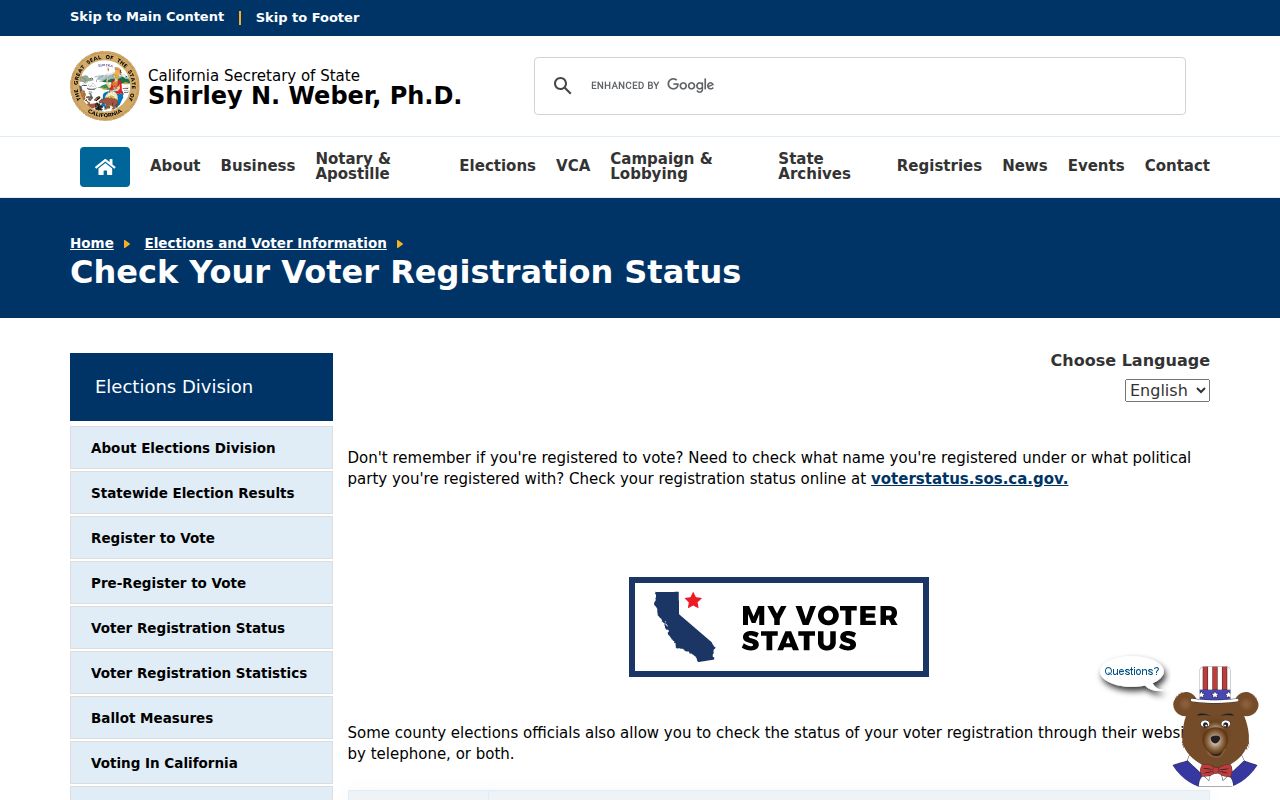
A missing name in the Stanislaus County records can have several honest explanations. The voter rolls mark some registrants inactive after moves. Others join the state's confidential address program. Historical gaps in the county residents directory are common too, especially for older streets where paper ledgers were lost or never digitized. None of this proves a person never lived at an address.
Image context: the qualified-purpose voter-file request describes the separate application, purpose, and file controls.
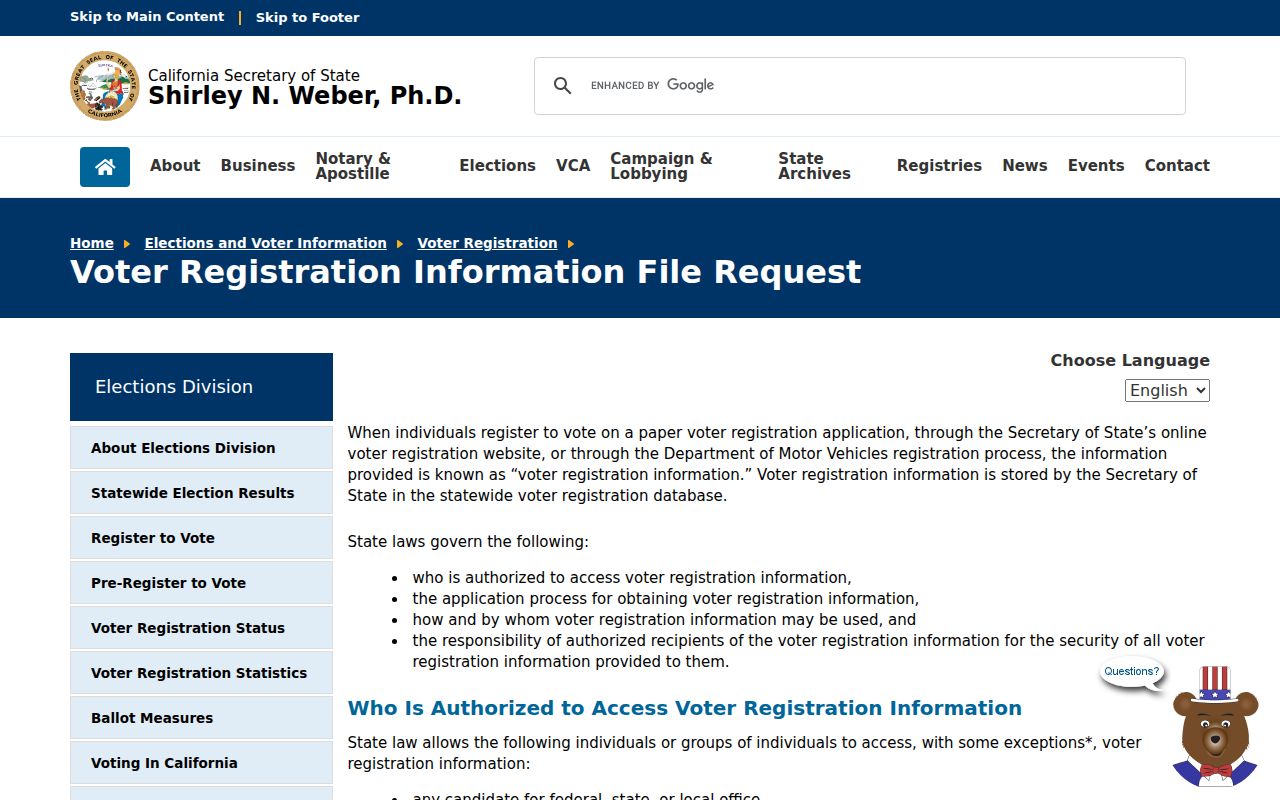
Fees follow the route you pick. The specific-voter route covers up to ten records at $30 each and stops at $100. The statewide file carries a listed price of $100. County fees vary from office to office. Those numbers belong to the current request form, not to any free public residents directory.
For local help, the Stanislaus County elections office directory points to the office at 1021 I Street, Suite 101, Modesto. Call 209-525-5200 during listed hours, 8:00 to 4:00, before you plan a records office visit.
Go through the lawful channel for voter records. Never republish a historical Oakdale street roster pulled from a restricted file.
Oakdale Safe at Home and Resident Records
Safe at Home gives an eligible participant a substitute mailing address plus a confidential-voter option. It is mail forwarding, plain and simple. It is not witness protection. It cannot scrub every prior public disclosure from the record. If the participant buys property in their own name, a legal description can still surface in a recorded deed at the county recorder. So a gap may appear in voter rolls, city directory entries, or parcel data. That gap may mark a lawful privacy boundary rather than a missing person. Respect the line.
The California Safe at Home program page explains the substitute-address route. It also covers the confidentiality protections behind it.
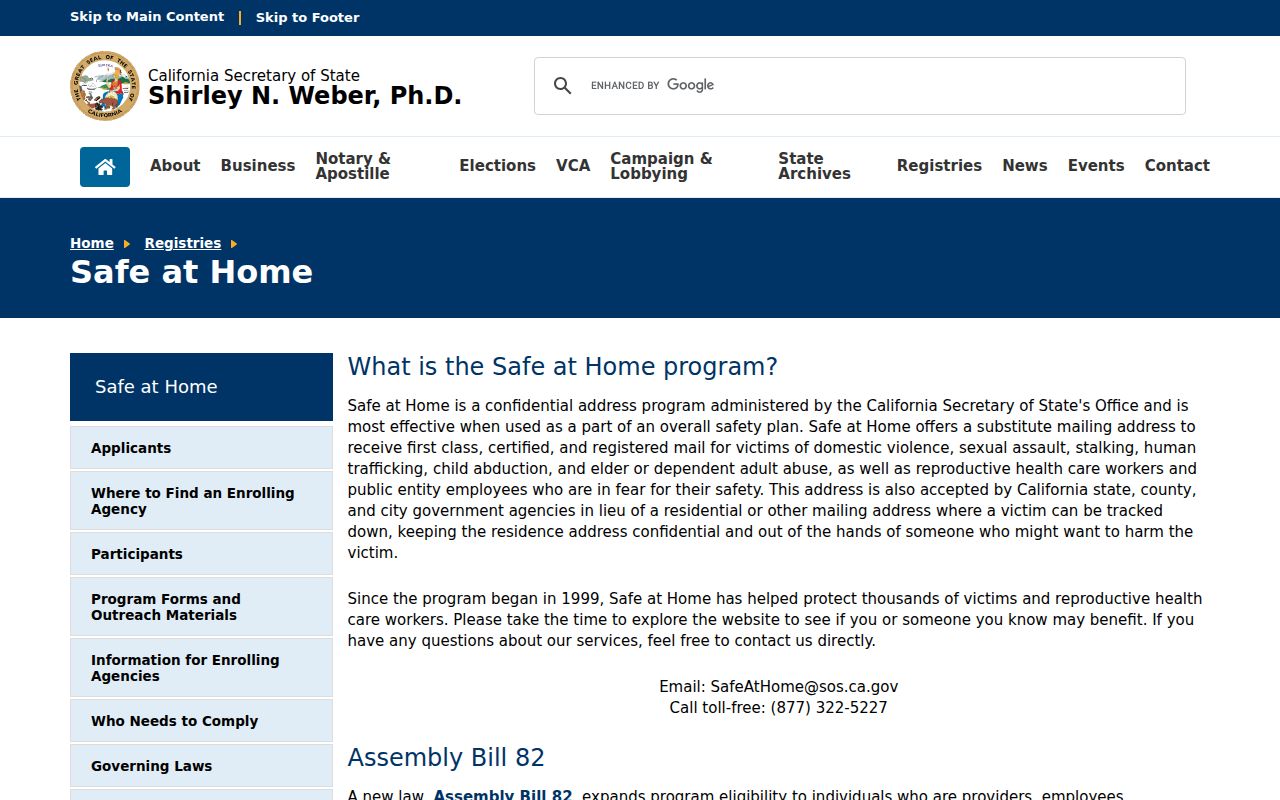
Respect the gap. A previous residents trail is for parcel and family history, not for reconstructing a protected person’s current location.
Lawful house history. Follow an address backward for deeds, architecture, genealogy, and documented public history. Do not use the chain to stalk, harass, threaten, or harm anyone.
For who lives at an address now, the Oakdale Street Directory is the right tool. Present-day occupant records live there. A previous residents search works best when it stays tied to the old parcel, its deed, and the documented sources a records office can confirm.