
Oakdale Resident Lookup Coverage
A record answers one narrow question. It rarely proves where a person lives today. A property roll ties a name to land. A court docket ties a name to a case, a date, and an outcome. Vital copies document births, deaths, and marriages under California access rules. Business filings list officers and agents. Old yearbooks and city directory pages set a name in its era. So before you search any Oakdale resident lookup database, pause. Ask what question the record actually answers. The custodian and the access method matter as much as the name you type.
| Record | What it can confirm | Where | Access route |
|---|---|---|---|
| Recorded document | Name tied to a land transaction, role, and date | RecorderWorks | Free index; copies by cart, counter, or request |
| Assessment roll | Owner, situs, mailing address, values, exemptions | Stanislaus Assessor | APN inquiry or public kiosk; name search restricted online |
| Public court docket | Case number, party role, events, disposition, status | Stanislaus Superior Court | Public portal; clerk for some files and copies |
| Vital record | Birth, death, marriage, or dissolution event | County Clerk-Recorder or CDPH | Informational or authorized copy rules |
| Business filing | Entity, agent, address, status, filing history | California Secretary of State | Free bizfile search; document orders may differ |
| Professional license | License identity, status, address of record, discipline | California DCA or board | Free official search |
| Directory or yearbook | Historical address, phone, school, or social context | Stanislaus Library | Noncirculating reference collection |
Start from your strongest clue. An address points you toward parcel, deed, and assessor systems. A case number points to the court. A family tie points to vital or probate records. A profession points to the state licensing board. One clue, one custodian. That habit keeps an Oakdale resident lookup sharp, and it stops a loose name search from piling up undated matches across every database in reach.
Build a Two-Record Oakdale Match
Anchor the search on two stable facts, not one common name. A middle initial works. So does an approximate age. A spouse or an occupation can help too. A parcel number or a known date also narrows things down. Any of these can split neighbors and relatives. That matters when people share a surname in the Oakdale records. Search the exact spelling first. Then try variants: former married names, accents that older indexes dropped, and bare initials. Finally, compare dates and identifiers across two independent systems before you trust the match.
- Write the known name, address or parcel, approximate time, and the reason the record matters.
- Run the official system that fits the first clue, saving the case, document, APN, or license number.
- Test the name variant in a second record family, not merely a second commercial compilation.
- Align dates, roles, legal descriptions, and addresses; mark each fact as confirmed, suggested, or unresolved.
- Order a copy from the custodian when the index is not enough, and stop at a sealed or protected boundary.
Some anchors hold better than others. A deed's legal description beats a city name. So does a court case number. Both pin a record to one verifiable place or proceeding. An address listed in a pleading only proves where someone was on a filing date. It is not proof of where they live now. Keep that distinction in mind. A public record can be fully accurate and still answer a different question than the one you asked.
Search RecorderWorks for an Oakdale Resident Lookup
RecorderWorks gives you three ways to run a resident lookup. You can search by name, by document number, or by book and page. The name search needs a last name. A first name, or even part of one, is optional. Turn on Partial Match to widen the net. Adding a From and To recording date keeps a sprawling search from growing unmanageable. The built-in help also recommends a partial first name to cut down on timeouts. From the results, a document number opens the record itself. A party name pulls up other indexed documents tied to that person in the Stanislaus County records.
| Party name | Use LAST FIRST; add a partial first name or variant when needed. |
|---|---|
| Party type | Note the role shown in the result, such as grantor, grantee, debtor, or creditor. |
| Recording dates | Search the date recorded, not the date an earlier transaction occurred. |
| Document locator | Record document number or the pre-1980 book and page. |
| Result fields | Recording date, document type, party names, role, linked name, and purchase or cart control. |
The index claims coverage back to 1 January 1850. Office guidance, though, splits the collection. Computer images run from 1978 forward, with older grantor-grantee books behind them. Stanislaus County was not created until 1854. So that early date reads as a statement about the index or record provenance rather than proof that every item came from the modern county office. Keep the distinction in mind when tracing past residents of Oakdale.
A recording proves only that a document was indexed and filed. It proves nothing about ownership today. It proves nothing about who lives at the parcel now, or whether every statement in the instrument holds true. Before a name becomes part of an Oakdale resident lookup, check it twice. Weigh the legal description and the date against a second source. Deed and property rolls answer different questions than a street directory does.
Reading an Oakdale Court Docket
For a public case search, the Stanislaus Superior Court public portal is where you start. The portal offers public, Justice Partner, and Attorney of Record roles. Each role has its own reach. A public search works from a case number. It also works from a party or participant name, a category, and a date range. Civil, criminal, family, probate, juvenile, and traffic cases can all surface. Sealed, adoption, juvenile, and confidential material stays closed, though, no matter how well you know the name. A docket may list the case number, title, filing date, and party names and roles. It may also list the judicial officer, department, hearings, the register of actions, disposition, status, and some payment controls. A document image is never guaranteed.
When the portal leaves questions open, the court locations and contact page is the next channel. Use it for a clerk question, a public terminal, an archive request, or a copy order. The official Stanislaus court contact information page is what separates a do-it-yourself index search from a clerk request for a full file. That request can cover an ordinary copy or a certified one.
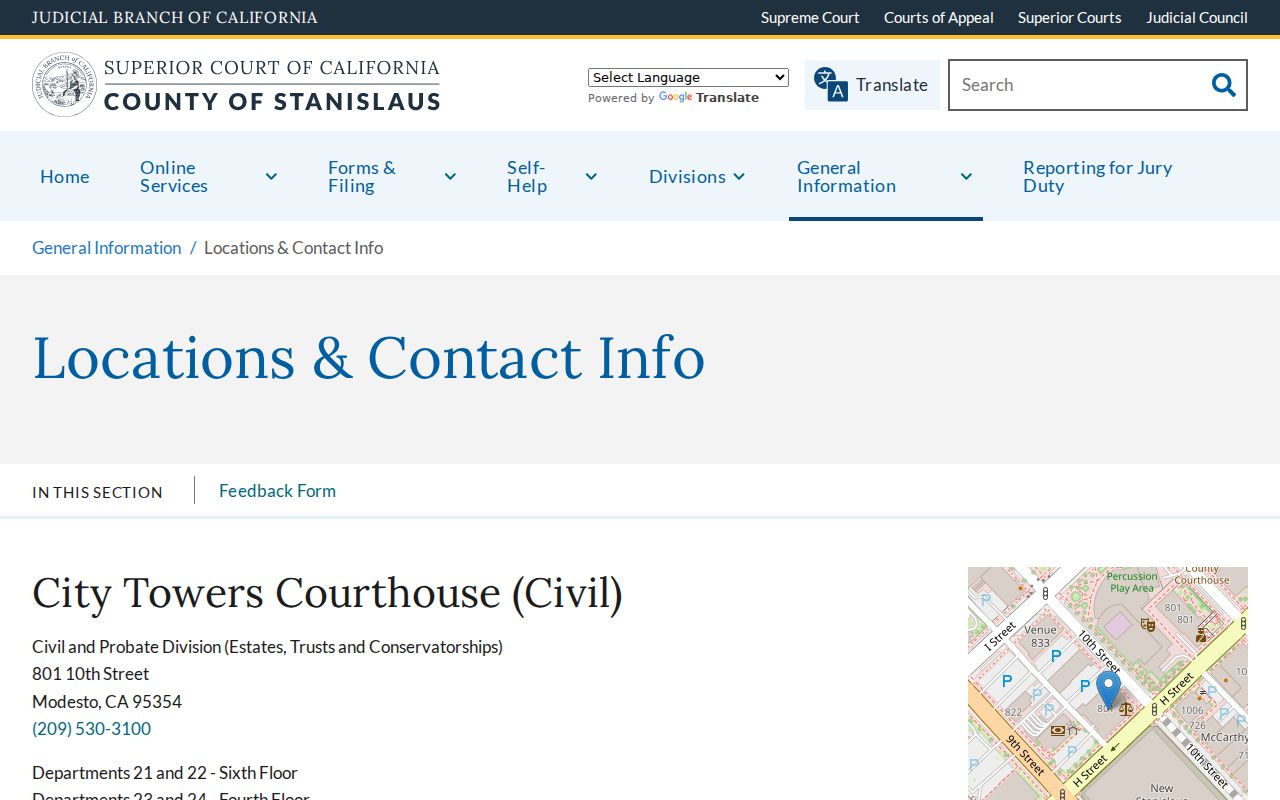
A court clerk hands out records and procedural guidance, not identity opinions. A same-name match, a dismissed case, or a stale address in the Oakdale records still needs a second source and a disposition check.
- Docket
- The court’s running record of a case, including filings, events, hearings, and status.
- Index versus image
- An index helps locate a case or document; the filed image may require separate access or a copy request.
- Certified copy
- A custodian-issued copy with a certification statement, available only under the record’s access rules.
Federal cases filed in Stanislaus County run through the Eastern District of California, so an Oakdale residents directory lookup stops at the state line there. PACER covers that side, searching federal party names, case numbers, and filing dates once you hold an account under the current federal fee schedule.
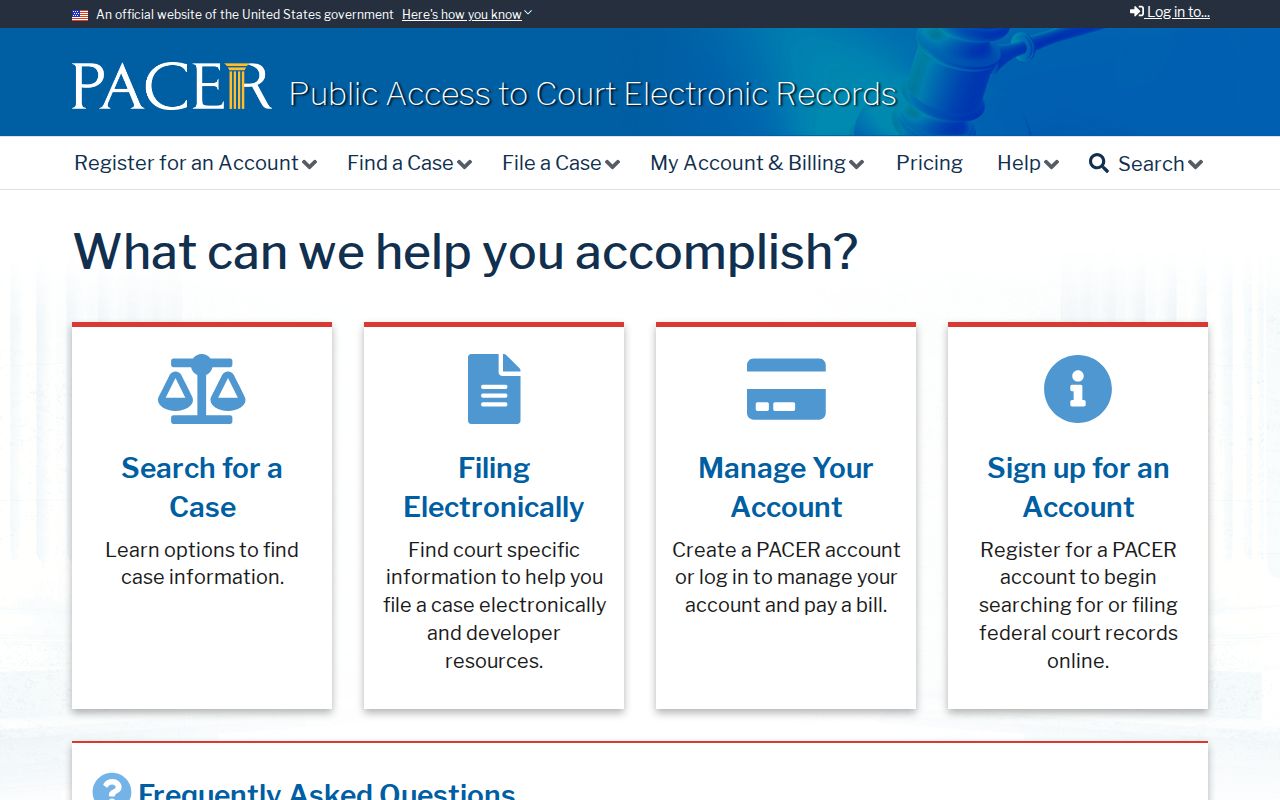
Keep a federal docket separate from your other records. Match the court, the case number, and the filed event before you treat it as the same person named in a Stanislaus state-court record.
Oakdale Probate and Heir Records
Probate is where family-history work earns its keep. When a question turns on someone who has died, a petition or notice may list the decedent, heirs, a personal representative, counsel, and how they relate. Redaction and file-access rules still apply. Search the public docket by name first. Then save the case number. Ask the clerk which papers you can view and which require a request.
A probate name pairs well with the RecorderWorks deed chain. It often explains why an estate or trust deed shows up years later. An obituary or cemetery entry can supply a rough date. But the certificate or filed court record is the stronger fact. What you want is a dated family trail. A broad list of living relatives is a different job entirely. And never try to reconstruct protected people from indirect clues.
Identity anchor. In a probate search, a case number, filing date, party role, and legal description do more work than a surname alone.
Oakdale Vital Records: Authorized and Informational Copies
California splits vital records into two access levels. Anyone can generally request an informational certified copy of a birth, death, or public marriage record. That copy is stamped as not valid to establish identity. An authorized copy is different. It requires a statutorily authorized requester plus a sworn statement. Mailed requests generally need notarization. Health and Safety Code §§103525-103526 govern the birth and death distinction. Family Code §509 limits confidential marriage copies. Adoption files with original birth records demand a statutory or court process.
| Record type | 2026 CDPH fee | Oakdale route | Key limit |
|---|---|---|---|
| Birth | $31 | Stanislaus Clerk-Recorder or CDPH forms | Authorized requester rules; informational copy does not establish identity |
| Death | $26 | County or CDPH | Authorized category applies to an identity-valid copy |
| Public marriage | $19 | County or CDPH | Distinguish public from confidential marriage |
| Dissolution certificate | $18 | CDPH; decree at Superior Court | Certificate and court file are different products |
Start with the California Vital Records ordering page for forms and instructions. Fees come from the current CDPH fee page. County forms ask for the subject, the event, the requester, and the copy type. A purpose or relationship may be required. Expect to give a signature and payment. A search that returns no record keeps its fee. For a birth-parent question, use the official adoption-information and court processes rather than trying to sidestep a sealed record. Do not attempt to work around a sealed record.
Oakdale Business and License Records
A resident lookup sometimes starts with a public business tie. The California Secretary of State's bizfile Online searches by entity name or number. Results commonly show entity type and status. They also show formation date, jurisdiction, principal or mailing address, agent for service, and filing history. The agent may be a service company. That proves nothing about where a person lives.
The California Department of Consumer Affairs search takes a board or bureau. It also accepts license type, license number, business name, first and last name, city, county, or ZIP, depending on the board. Results usually include license number and type. They also cover status, issue or expiration dates, address of record, and public discipline. Check the board-specific result, since not every profession runs through the same umbrella search. The California bizfile Online business search shows the entity route for a public affiliation clue.
A business result gives you an entity trail, not a home address. Any officer, agent, or mailing field should be verified independently. Only then should you connect it to a resident. For credentials, the California DCA license search is the official route. Use it when a license number, board, or public business name is known.
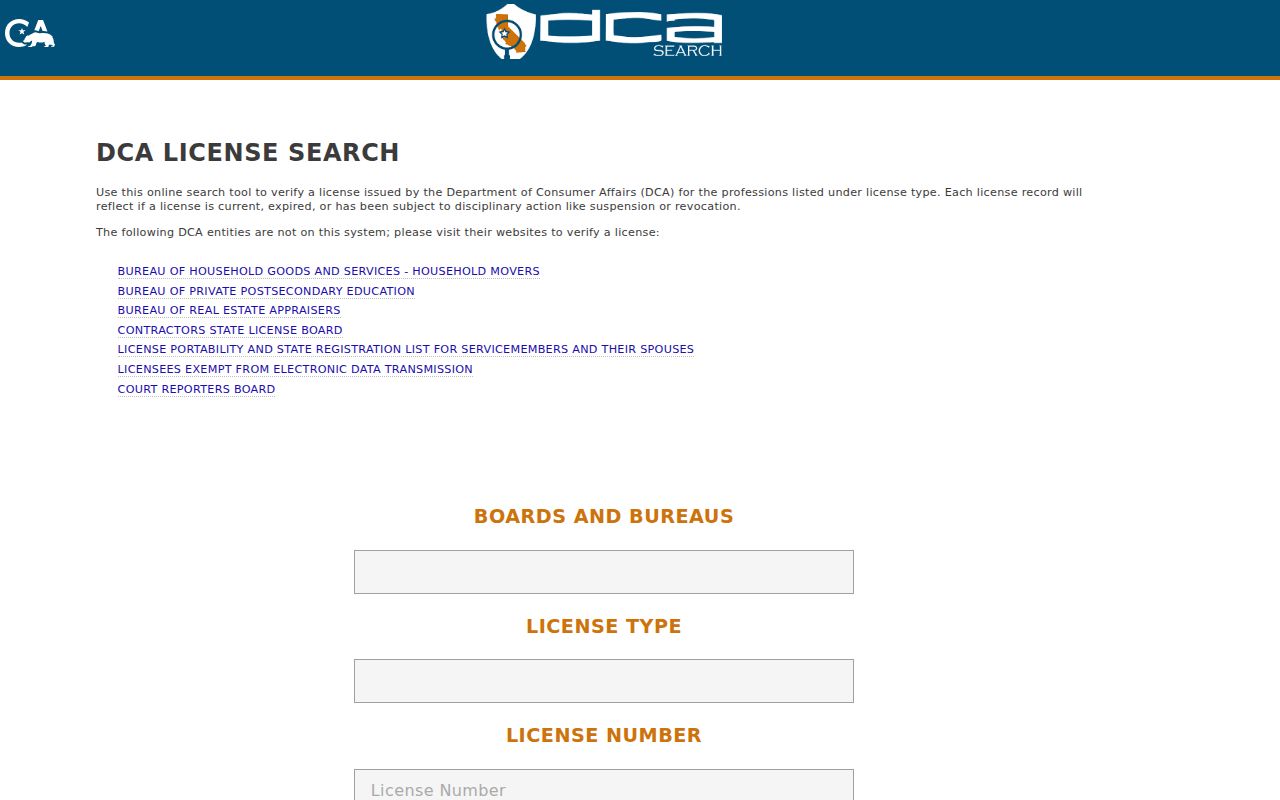
Treat a business filing or license as one corroborating source among several. An address of record may be a business location, a mailing drop, or a service address rather than a home.
Oakdale Unclaimed Property Records and Former Names
The California State Controller's unclaimed-property search works from an owner name and city. A result can show the owner name and a reported address or city. It can also show the reporting business and a property ID or type. Claiming then asks for identity documentation. This helps when a former name or old Oakdale connection is known. Still, an unclaimed-property record is not a current-residence record.
Try punctuation variants, initials, married and maiden names, and reasonable spellings. Then compare the result against a deed, obituary, probate record, or business filing. Search and claim directly with the Controller. No finder fee is needed to begin. An urgent demand for payment or personal documents through an unsolicited link is a warning sign. The California unclaimed-property search is the official state route for a name-and-city lead.
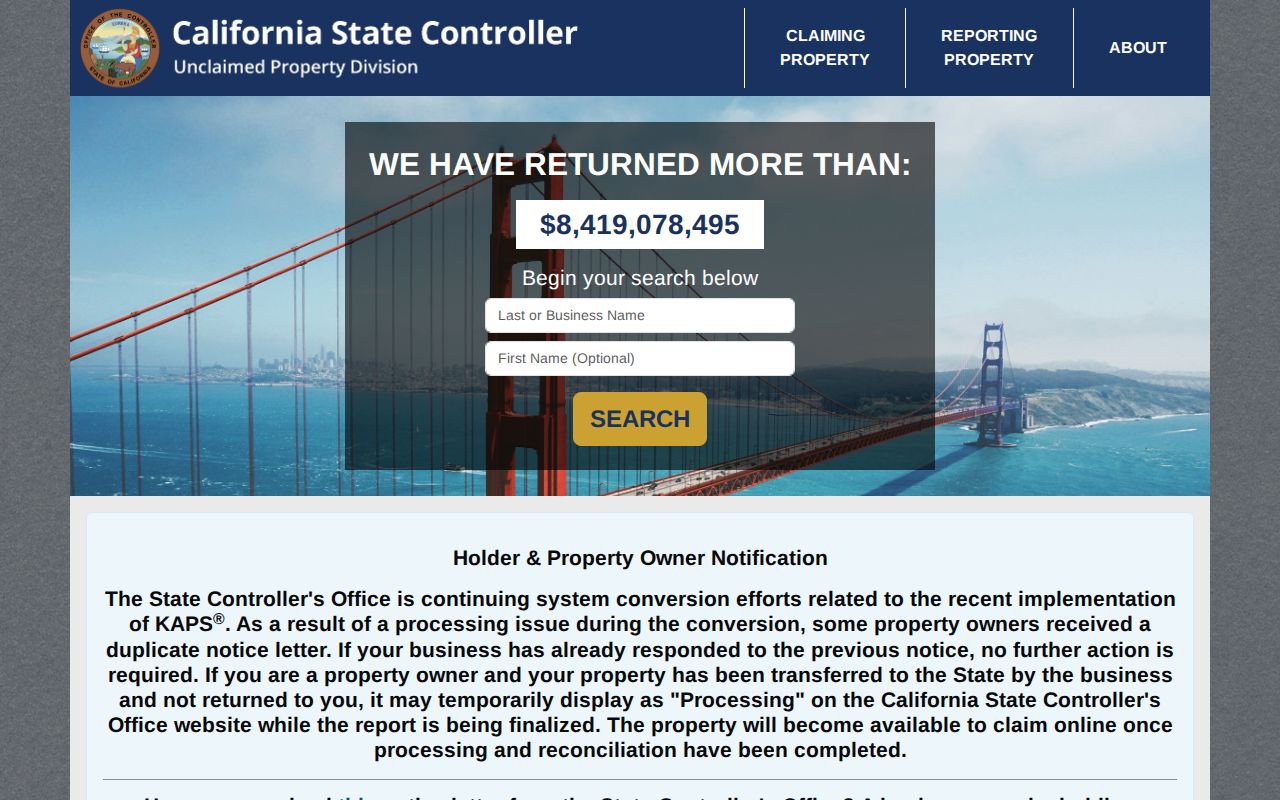
A result is only a lead. It becomes something more once the Controller accepts the claim and the supporting record lines up with the person.
Oakdale Birth-Parent and Classmate Records
Different human questions belong with different custodians. A birth-parent search runs through California adoption-information procedures and, where needed, a court. A classmate search lives in yearbooks, library archives, newspapers, and community history. An heir search sits in probate notices, deeds, obituaries, and certificates. Let the relationship pick the record path. Resist the urge to search every database at once.
Start with a yearbook or a newspaper. That establishes a historical connection. Then ask whether the person is living before attempting contact. Student records are protected. A public staff page proves only a professional role. For family history, one dated source and respectful outreach beat a pile of unverified addresses. A closed adoption or confidential record is a lawful boundary, not a puzzle to bypass.
Oakdale Voter Lookup Is Private
California keeps its voter records closed to casual browsing. The state's My Voter Status tool is a private self-check. A voter signs in with identity and authentication fields to view registration status, party, districts, election details, and ballot information. A public visitor cannot search Oakdale names or a street through that form. Access to voter files for other purposes runs through a separate qualified request under Elections Code §2194. Use is limited to election, scholarly, journalistic, political, or governmental work.
A specific-voter request can require full name, date of birth, county, and residence address. The statewide application also covers purpose, organization, security, delivery, retention, and destruction certifications. Fees are set statewide: $100 for the request. Up to ten specific records cost $30 each under a $100 cap. Participation history never reveals ballot choices. Confidential voters and Safe at Home participants stay excluded from any residents directory built on voter rolls.
Boundaries for an Oakdale Resident Lookup
Every resident lookup has limits. Juvenile, adoption, sealed, confidential, and protected court material stays closed. Vital copies may require an authorized relationship. DMV data is restricted under the federal Driver's Privacy Protection Act. California's Safe at Home program can supply a substitute address along with confidential voting. So a redacted recorded document or a missing voter entry may simply reflect a lawful protection.
Fixing a wrong record means going to its custodian. That means the recorder for an index or recorded instrument. It means the Assessor for parcel fields. It also means the court division for a docket. Elections handles the voter's own registration. CDPH handles a vital amendment. The Secretary of State or a licensing board handles business and license filings. An Oakdale resident lookup is for personal, lawful research. It also serves family history, civic information, and respectful reconnection.
Lawful use. Do not use a name, address, court result, or public record to stalk, harass, threaten, intimidate, or harm anyone. A public result still deserves careful and limited use.
If the goal shifts from one person to the whole street, the Oakdale street directory workflow fits better. Tracing a residence backward through time calls for the historical directory and deed-chain methods instead of repeating a name search without dates.