
Oakdale's Directory Shelf and Runs
Stanislaus County Library’s Modesto Special Collections is the verified local research spine for an Oakdale city directory search. The collection description names genealogy, California and local history, older high-school yearbooks, non-current telephone directories, and city directories. Materials are noncirculating and used in the library. Exact Oakdale publishers and year runs are not posted in the research material, so a strong citation starts by confirming the title, edition, geographic scope, and current shelf or service location.
| Collection | Verified coverage | Where held | Access and use |
|---|---|---|---|
| Non-current Oakdale city directories | Exact years not posted | Modesto Special Collections | Noncirculating, in-library reference |
| Non-current telephone directories | Exact years not posted | Modesto Special Collections | Name, address, phone, and possible reverse sections |
| Older high-school yearbooks | Schools and years not posted | Modesto Special Collections | Portraits, classes, clubs, and school context |
| Modesto Bee digital collection | 2000 to current | NewsBank through the library | Search surnames, Oakdale notices, and obituaries |
| Federal census | 1790 to 1950 public; 1960 scheduled for 2032 | NARA and partner sites | Household sheets; enumeration geography varies |
| Recorder index | 1850 to present claim | Stanislaus Clerk-Recorder | Ownership and transfer trail to pair with a directory |
The table separates verified collection categories from unverified local year lists. That distinction is part of the Oakdale city directory answer. It is better to say “exact year requires a shelf check” than to supply a familiar publisher or date that the local catalog has not confirmed.
The Oakdale Directory Shelf at Modesto
The Stanislaus County Library Special Collections description places city directories, telephone books, genealogy, local history, and yearbooks in a single research setting. The Oakdale branch is a useful first contact, while county reference service at 209-558-7814 can help identify editions and alternate access. Materials do not circulate, so a research visit needs more preparation than a normal checkout.
Ask the reference desk to search every catalog title containing Oakdale or Stanislaus County with “city directory,” “telephone directory,” “reverse directory,” “criss-cross,” or “street guide.” Request the publisher, edition year, geographic scope, presence of a street section, and current location. The same inquiry can ask for Oakdale High or Oakdale Joint Unified yearbooks, obituary indexes, newspaper microfilm, Sanborn map access, and copying rules.
The library’s reference role closes the gap between a directory name and a properly identified edition. A shelf call is part of the source, not an optional extra.
What an Oakdale Directory Run Needs Confirming
No official online shelf list in the research record supplies a publisher-by-publisher Oakdale city directory chronology. There is also no verified digitized Oakdale entry, confirmed reverse-directory year set, or official sample page. That is a genuine research gap. A directory page that fills it with assumed Polk years would turn a useful lead into a false citation.
Before quoting a volume, record its title page, publisher, edition year, geographic scope, copyright or access limit, and abbreviation key. Note whether the book covers Oakdale alone, a wider county, or a telephone exchange. Confirm whether numbered streets sort by number, whether directional prefixes are separate, and whether the street section is a true reverse index or only an address supplement.
| First check | Title page and publication year |
|---|---|
| Scope check | Oakdale, Stanislaus County, telephone exchange, or wider regional coverage |
| Reading check | Abbreviation key, owner or renter marks, spouse and widow symbols |
| Address check | Name section, street section, number order, directional and suffix treatment |
| Access check | Noncirculating rules, photography or copying rules, and current location during renovation |
Those checks preserve the useful uncertainty. They also make the next library visit efficient because the researcher knows exactly which missing fact to ask for.
Reading Oakdale Directory Names and Marks
An actual Oakdale directory entry has not been inspected in an official digitized source. The fields below are a protocol for testing a local volume, not a claim that every Oakdale edition uses every mark. Older directories often compress a household into initials, abbreviations, a spouse or widow notation, occupation, employer, residence address, telephone, and owner or renter symbols. The edition’s own key controls the meaning.
| Name | Record surname, given name, initials, spouse marker, and any widow notation exactly as printed. |
|---|---|
| Occupation | Capture the occupation or business only when the volume displays it. |
| Address | Separate residence, business, boarding, rural route, and telephone information where the key defines them. |
| Owner mark | Do not infer ownership from a symbol until the edition’s abbreviation key explains it. |
| Reverse entry | Compare the street-order listing with the alphabetic name entry and note omissions. |
- Criss-cross section
- The street-order half of a directory, useful for moving from an address to a listed name.
- Householder index
- A name or household arrangement that may not include every person at an address.
- Abbreviation key
- The volume’s guide to marks, initials, occupations, residence terms, and other shorthand.
- Index versus image
- A searchable finding aid can point to a page, while the page itself supplies the source context.
Write the entry as a dated observation. Do not turn a directory shorthand into a modern fact about a living person. A historical listing can support family history when it is corroborated by another source.
The Oakdale Reverse Directory Section
A name-to-address city directory and an address-to-name reverse section answer different questions. The first follows a surname through editions. The second starts at a street and number, then reveals a listed occupant or telephone if the volume includes that coverage. The two sections can disagree because of publication timing, non-subscribers, rural delivery, spelling changes, or a household that moved between print dates.
For a historic Oakdale address, copy every visible occupant or phone listing, then record the cross street, number format, and edition date. Compare the street entry with the alphabetic entry. If the number vanishes, test an address change through the deed’s legal description, a subdivision map, Library of Congress Sanborn maps, and consecutive directories. The research found no verified Oakdale-wide renumbering year, so a suspected change must stay qualified until an ordinance, map, or edition crosswalk supports it. Oakdale sheet coverage still needs catalog confirmation.
Pair Oakdale Directory Years With Census
A directory gives frequent snapshots. A federal census gives a household sheet at a released interval. Together they can show a move, a spouse, a child, a boarder, a change in occupation, or a gap in a telephone listing. The 72-year rule currently makes census records through 1950 public, while Oakdale enumeration geography can vary by census year. Maps and cross streets matter when a rural or growing area changes shape.
- Choose a name or address and record the directory edition, page, and exact spelling.
- Find the nearest public census year and inspect the full household sheet, not only an index line.
- Compare age, relationship, occupation, address description, and neighboring households.
- Use the next directory edition to test whether the household moved, changed names, or disappeared from print.
- Close a relationship question with a deed, obituary, cemetery record, or probate file.
A missing entry can mean no volume, no telephone, a spelling or initial change, rural delivery, institutional residence, or a move. The census is not a current resident list, and the directory is not a complete household count. Their value comes from the dated pattern.
Oakdale Directory and Yearbook Trails
Older high-school yearbooks belong beside the city directory collections because they add portraits, classes, clubs, activities, and school-year context. The research names Oakdale Joint Unified School District yearbooks and archive material as possible classmate resources, but exact titles and years need library confirmation. Student records remain protected, so a public yearbook should be handled as a historical source, not an invitation to reconstruct a private student file.
Use a school name, approximate graduation year, known classmate, or family surname to ask the reference desk for a title. Compare the yearbook name with a directory address and a newspaper notice. A staff page is a professional contact source, not evidence about a student’s household. When a classmate search reaches a living person, respectful contact and a way to decline matter more than finding one more data point.
Oakdale Newspapers After a Directory Entry
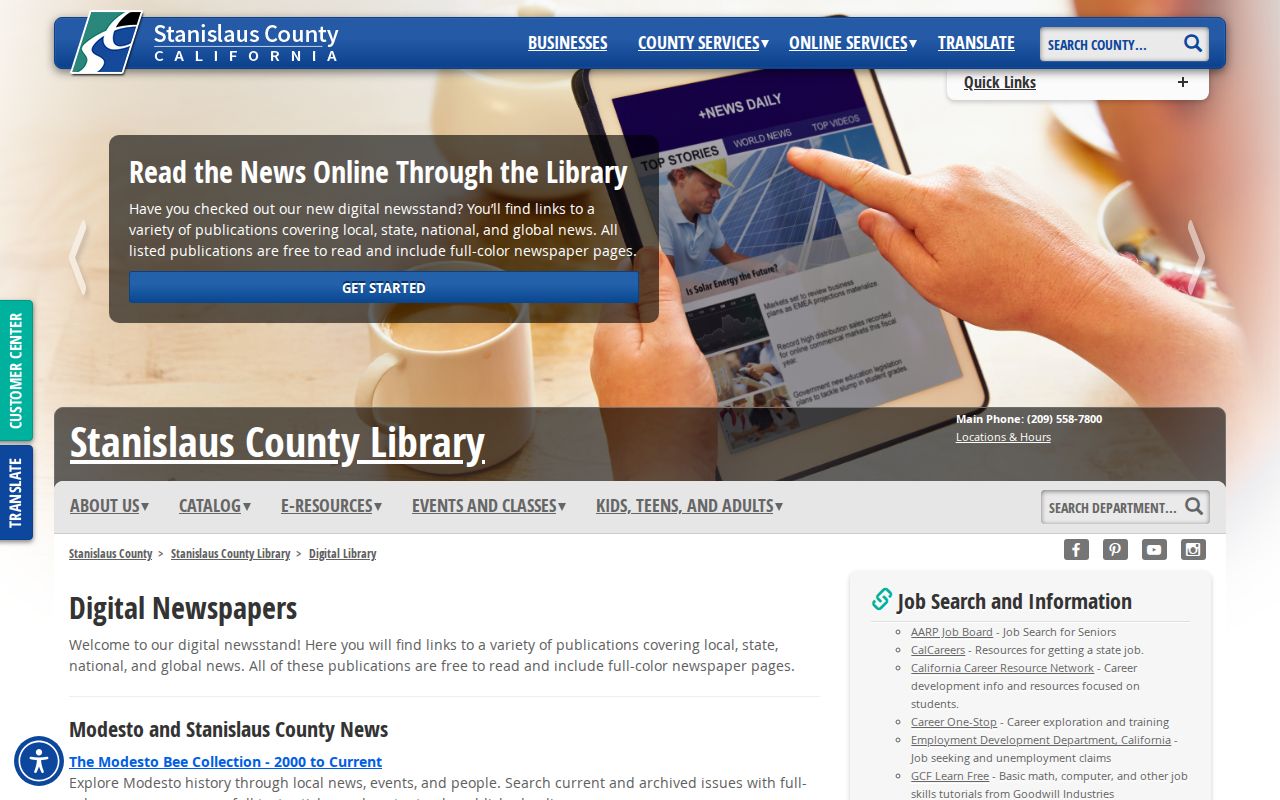
The library’s digital newspaper page supplies the Modesto Bee Collection from 2000 to current through NewsBank. Search “Oakdale” with a surname, address fragment, school, church, ranch, or civic group. Obituaries, marriage announcements, school coverage, civic notices, local business news, and legal notices can explain a directory change or identify a relationship that the terse entry leaves out.
Image context: the library’s digital newspaper collection documents the Modesto Bee search route for later Oakdale notices.
A newspaper is contextual evidence. Verify dates and relationships against a certificate, probate file, deed, census sheet, or cemetery record before treating the report as final.
For earlier years, ask about newspaper microfilm and the Oakdale Leader, the local paper identified in the research. Coverage may be incomplete, and an obituary can contain a family error, so preserve the page date and source title.
Oakdale Directory Clues in Ranch Records
Oakdale’s ranch identity creates a historical directory layer that a standard city volume may miss. The branch collection reportedly includes a copy of Cattle Brands, and the research identifies cattle-brand books or indexes as possible links among ranchers, operations, symbols, and rural addresses. Verify the exact edition in the catalog or by calling the branch before citing it.
A brand clue can supply a surname or ranch name. Pair it with a deed, census sheet, directory, newspaper, or agricultural record. It does not prove that a person lived at a current parcel, and a ranch name may cover land, family, or business activity across several years. The local color is useful because rural-route households can be absent from urban telephone sections.
2026 Oakdale Directory Shelf Access Check
The library locations information says Modesto Library, home of Special Collections, is closed for renovation and scheduled to reopen in October 2026, with an Express Library at 1002 10th Street. Call before traveling. Ask whether the directory, telephone, yearbook, newspaper, and Sanborn materials are accessible at the current location, whether photography is allowed, and whether staff can supply a title-by-title Oakdale holdings list.
Image context: the Oakdale branch hours and location page is the practical first check before a local reference visit.
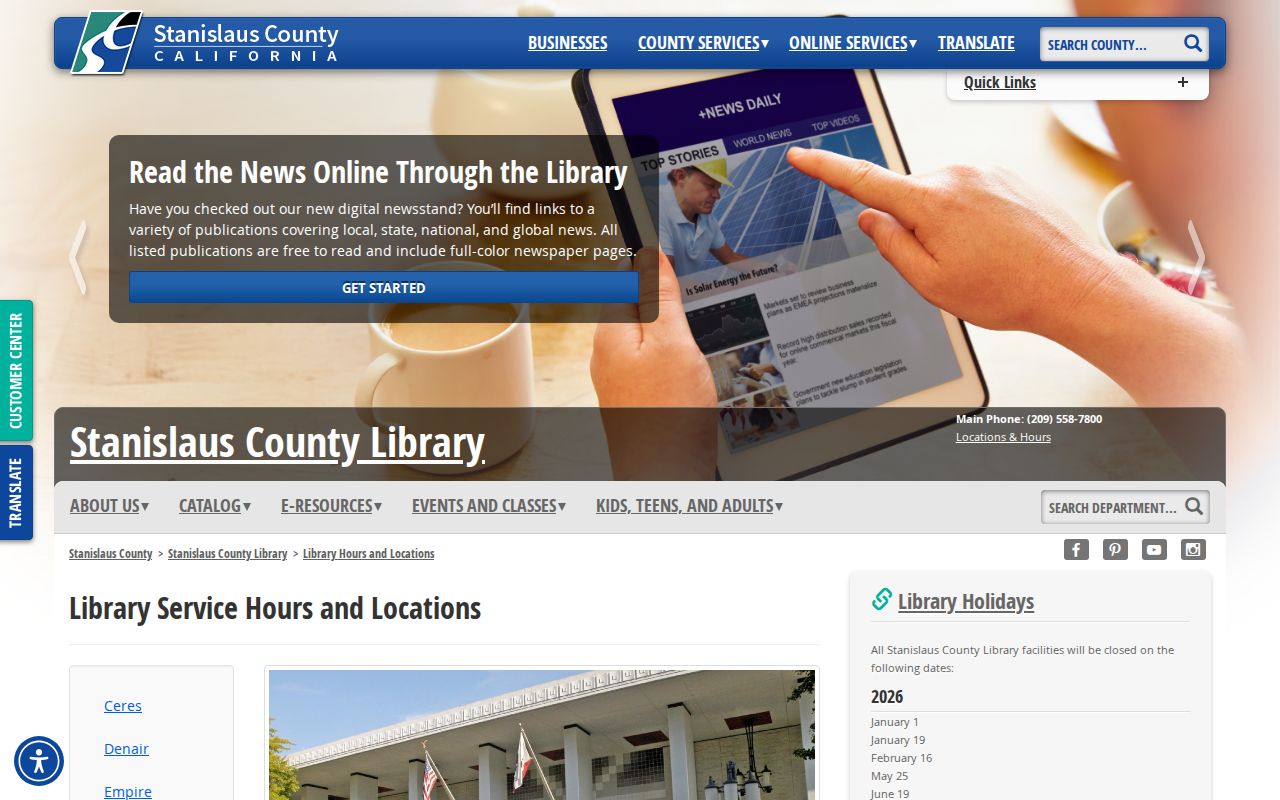
The branch can help with local orientation, while the county reference number can help locate the noncirculating historical shelf. Current access is part of the citation because a directory cannot be checked from a closed or relocated room without notice.
Image context: the Stanislaus Clerk-Recorder fee schedule is the county source to check before ordering a copy connected to a directory or deed trail.
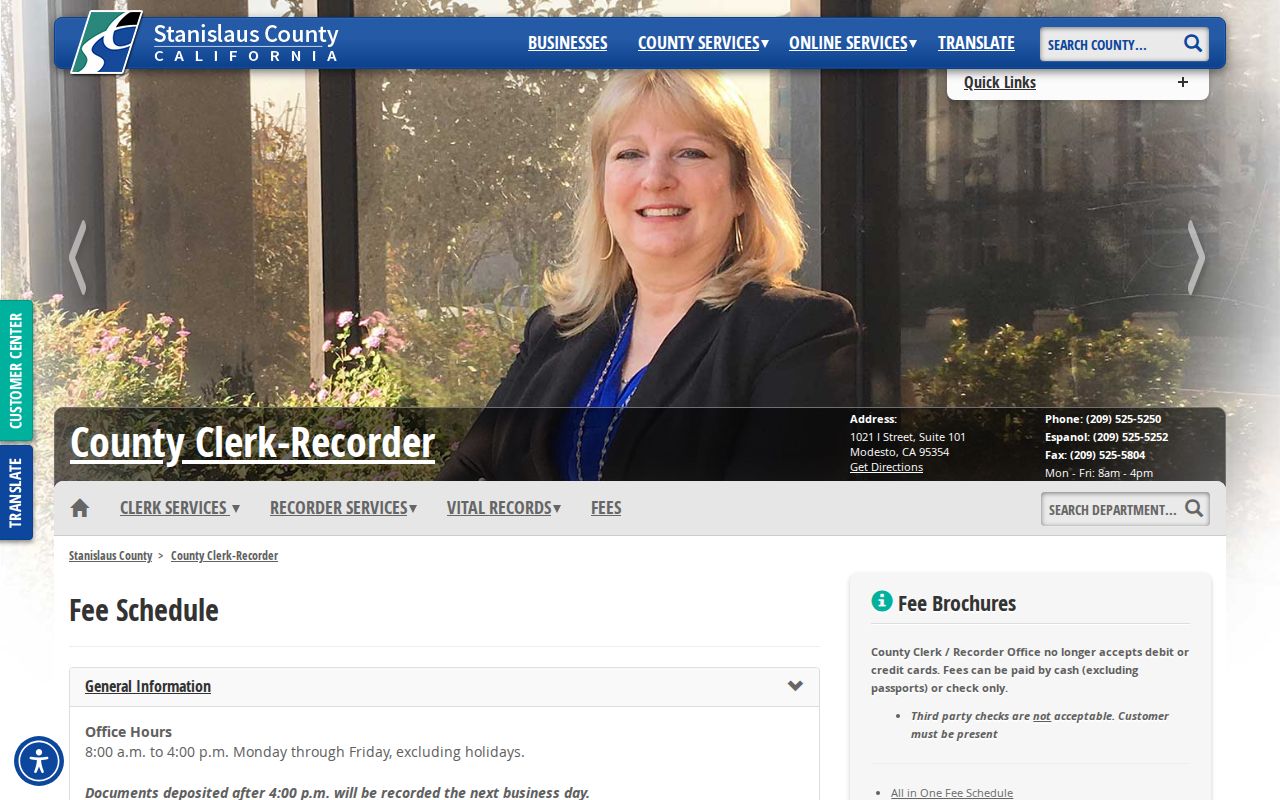
Fees and request channels belong to the recorded-document source, not to the historical directory itself. Confirm the live schedule before sending payment.
When a directory entry must be tied to a recorded event, the Clerk-Recorder’s document guidance supplies the separate deed and grantor-grantee route. The collection and the deed should support each other, not stand in for one another.
Image context: the recorded-document search guidance explains how the county distinguishes computer images, older books, grantor, and grantee.
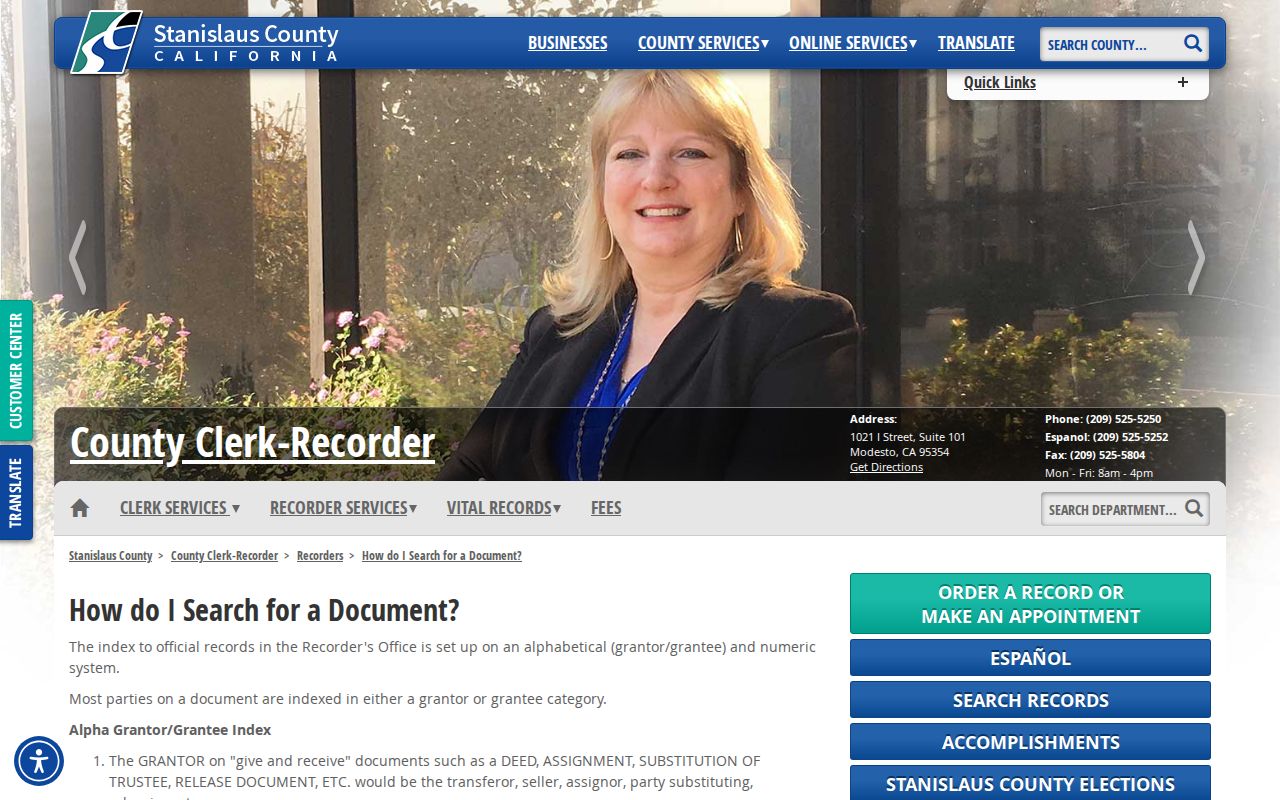
A historical Oakdale city directory becomes most persuasive when the edition is identified, the entry is transcribed in context, and an independent record supplies the next dated step.